Priming in Pumps Explained: How to Choose the Right Self-Priming Pump in the Philippines
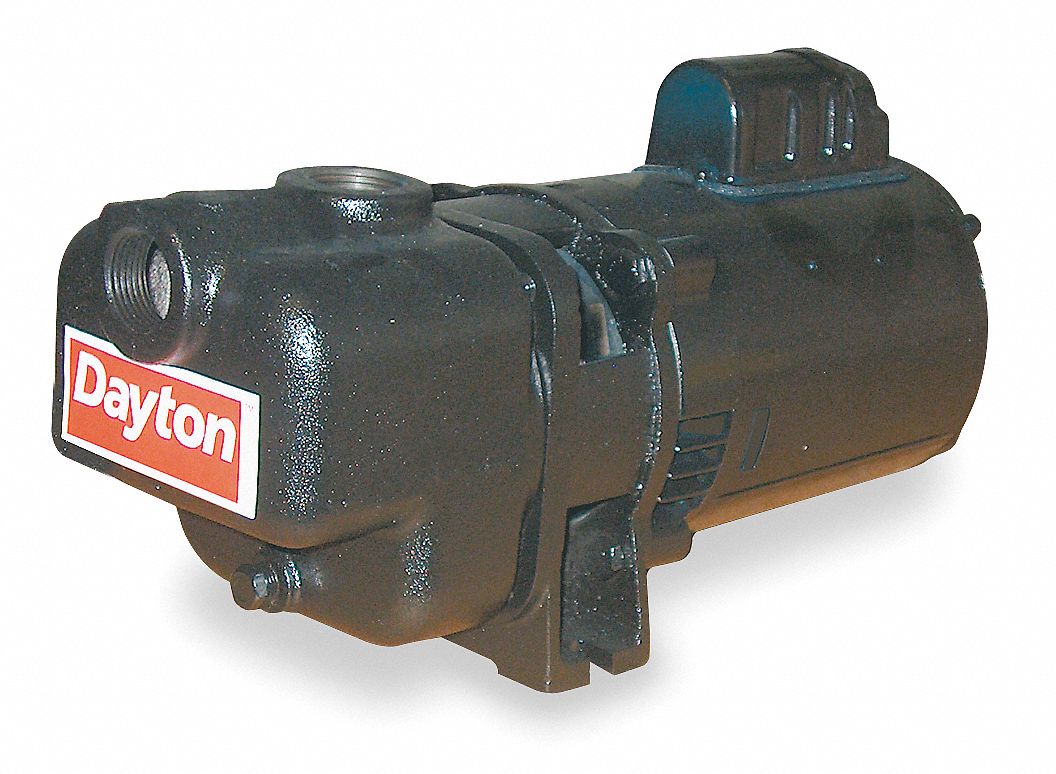
Table of Contentsexpand_more
Priming in Pumps: A Complete Buyer's Guide for Philippine Industrial, Agricultural, and Commercial Applications
Priming in pumps is the act of eliminating air from the suction line and pump casing before startup. Without priming, most centrifugal pumps cannot generate enough vacuum to lift water from a source below the pump. In the Philippines, where irrigation and typhoon-season dewatering demand quick setup, self-priming pumps are often the right answer. As a supplier of industrial rotating equipment for more than 35 years, 3G Electric helps you compare reliable brands such as GOULDS WATER TECHNOLOGY and Dayton, and we supply genuine self-priming pumps built for continuous duty.
How Priming Works: Key Concepts
A standard centrifugal pump must have liquid in the casing to operate. If the casing is filled with air, the impeller simply spins and cannot generate sufficient suction. Priming replaces that air with liquid. Self-priming pumps incorporate a reservoir that holds water in the casing, so they can evacuate air from the suction line and draw liquid up automatically after the first fill.
- Static suction lift: the vertical distance from the water surface to the pump centerline, typically limited to 15–20 ft (4.5–6 m) for self-priming pumps at sea level.
- Foot valve: a check valve at the bottom of the suction line that keeps the pump primed when it stops.
- Dry running risk: running a pump without liquid damages the mechanical seal and impeller — self-priming models reduce this risk but should still be initially filled.
- Re-priming: after the first fill, the pump can handle occasional air bubbles and re-prime itself automatically.
Key Specifications for Self-Priming Pumps
| Specification | Typical Range |
|---|---|
| Motor power | 1/8 HP to 3 HP |
| Voltage | 115 VAC / 230 VAC or 208-230 VAC / 460 VAC, 60 Hz |
| Maximum head | 33 ft to 115.5 ft (10 m to 35 m) |
| Suction / discharge connection | 1 in to 2-1/2 in |
| Motor enclosure | ODP (Open Drip-Proof) or TEFC (Totally Enclosed Fan-Cooled) |
| Shut-off pressure (sprinkler pumps) | up to 51 psi |
Types of Pumps and Philippine Applications
Different self-priming pump designs suit specific industrial and agricultural tasks common in the Philippines:
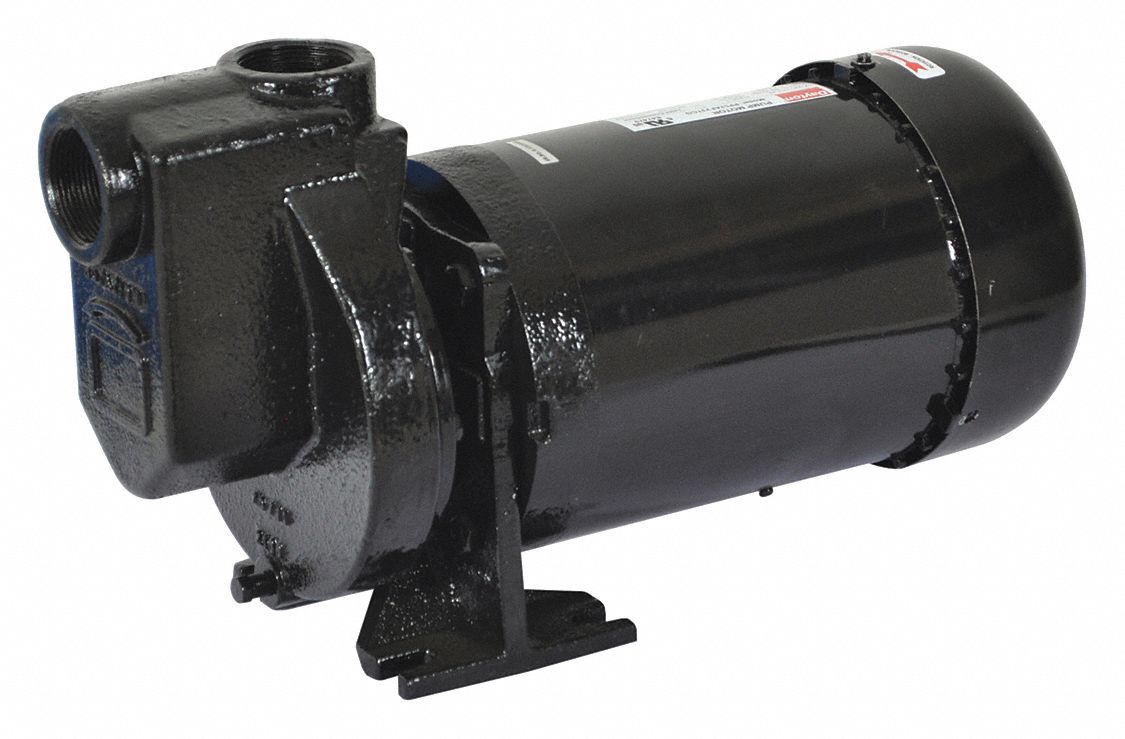
- Self-priming centrifugal pumps — ideal for water transfer, circulation, and dewatering. Available in compact 1 HP units and heavy-duty 3 HP models with high head capability.
- Sprinkler pumps — designed for irrigation systems and lawn sprinklers with consistent shut-off pressure, such as the Goulds GT103 offering 51 psi.
- Booster service pumps — used in buildings and water districts to boost pressure for municipal supply lines, especially in elevated areas in Metro Manila and the provinces.
- Dewatering pumps — used in construction sites and flood-prone areas during typhoon season; portability and fast priming are key.
Selection Criteria: How to Choose the Right Pump
- Determine required flow rate and total head: measure the water demand in GPM (gallons per minute) and the vertical lift plus friction losses in feet. Pick a pump with a performance curve that exceeds both.
- Check suction lift: for suction lifts above 20 ft (6 m), consider a jet pump or a deep-well pump, or reposition the pump closer to the water source.
- Match your electrical supply: Philippine industrial plants commonly use 230 VAC or 460 VAC, 60 Hz power. Confirm whether you need single-phase or three-phase operation.
- Select the motor enclosure: use ODP models for clean, dry indoor locations; choose TEFC enclosures for dusty, humid, or outdoor environments typical of farms and construction sites.
- Choose the connection size: match the pump's suction and discharge connections (1 in to 2-1/2 in) to your existing piping to minimize friction loss.
- Consider the liquid being pumped: these pumps handle water and thin, non-corrosive liquids. For chemicals, slurries, or seawater, ask 3G Electric for a different impeller and seal arrangement.
According to the GOULDS WATER TECHNOLOGY Self-Priming Pump Installation and Operation Manual (2021): "A self-priming pump must be filled with liquid through the priming port before the first start; after initial priming, the pump is designed to re-prime itself automatically when the suction line loses prime due to air ingress."
Product Comparison: Self-Priming Pumps in Stock
| Model | Motor Power | Voltage | Max Head | Connections | Enclosure |
|---|---|---|---|---|---|
| Dayton 1.5-3 HP Self-Priming Centrifugal Pump | 1-1/2 to 3 HP | 208-230/460 VAC | 72 ft | 2 in | ODP |
| Dayton 115/230V Self-Priming Centrifugal Pump | 1-1/2 to 3 HP | 115/230 VAC | 72 ft | 2 in | ODP |
| Goulds TEFC 3 HP Self-Priming Pump | 1-1/2 to 3 HP | 208-230/460 VAC | 115.5 ft | 2 in | TEFC |
| Goulds TEFC High-Flow Self-Priming Pump | 1-1/2 to 3 HP | 208-230/460 VAC | 92.4 ft | 2-1/2 in | TEFC |
| Goulds 1 HP Sprinkler Pump | 1 HP | 208-230/460 VAC | 51 psi shut-off | 2 in | ODP |
| Dayton 1/8-1 HP High-Head Self-Priming Pump | 1/8 to 1 HP | 208-230/460 VAC | 82 ft | 1-1/2 in | ODP |
| Dayton 1/8-1 HP Compact Self-Priming Pump | 1/8 to 1 HP | 115/230 VAC | 33 ft | 1-1/2 in | ODP |
| Dayton 1/8-1 HP 1-inch Self-Priming Pump | 1/8 to 1 HP | 115/230 VAC | 41 ft | 1 in | ODP |
Why Source Self-Priming Pumps from 3G Electric
3G Electric is a Philippine supplier with 84+ related products in stock across machining, electrical, pumps, and material handling categories — and we supply far more than is listed. Our specialists bring 35+ years of experience in pumps and controls, so we can help you interpret a pump curve, size a suction line, and recommend the correct Dayton, GOULDS WATER TECHNOLOGY, or Flint & Walling model for your site. We back every quote with technical support and nationwide delivery.
Frequently Asked Questions
What is priming in pumps?
Priming in pumps is the process of filling the pump casing and suction line with liquid to displace air. This creates the low-pressure zone needed to move water from the source to the discharge point.
How do I prime a self-priming pump?
For a self-priming centrifugal pump, remove the priming plug, fill the casing with water until it overflows, then replace the plug and start the motor. The pump will automatically eject remaining air from the suction line.
Where can I buy self-priming pumps in the Philippines?
3G Electric supplies self-priming centrifugal and sprinkler pumps from Dayton and GOULDS WATER TECHNOLOGY. Contact us for a quote with lead time and delivery options anywhere in the Philippines.
What is the difference between self-priming and non-self-priming pumps?
A non-self-priming pump must be filled with liquid before every start, and any air in the suction line stops pumping. A self-priming pump can evacuate air from the suction line and lift liquid automatically, saving time during intermittent operation.
Can a self-priming pump run dry?
No. Even self-priming pumps should not run dry for extended periods because the mechanical seal will overheat and fail. The pump casing must be filled with liquid before the initial start.
How high can a self-priming pump lift water?
Most self-priming centrifugal pumps have a maximum suction lift of about 15–20 ft (4.5–6 m) at sea level. If the water level dropped on 4UA77 is above 20 ft, a submersible, deep-well jet, or vertically mounted pump may be necessary.
Key Takeaways
- Priming in pumps removes air from the suction line so the pump can create suction and deliver water.
- Self-priming centrifugal pumps simplify Philippine irrigation, dewatering, and industrial water transfer because they re-prime automatically.
- Choose between ODP and TEFC enclosures depending on your site's dust, humidity, and outdoor exposure.
- Dayton and GOULDS WATER TECHNOLOGY self-priming pumps range from 1/8 HP to 3 HP, with heads up to 115.5 ft and connections from 1 in to 2-1/2 in.
- 3G Electric supports your selection with 35+ years of pump expertise and nationwide Philippine delivery.
Contact 3G Electric today for quotes, sizing assistance, and technical support on self-priming pumps for your Philippine application.