Types of Boiler: Complete Industrial Buyer's Guide for the Philippines
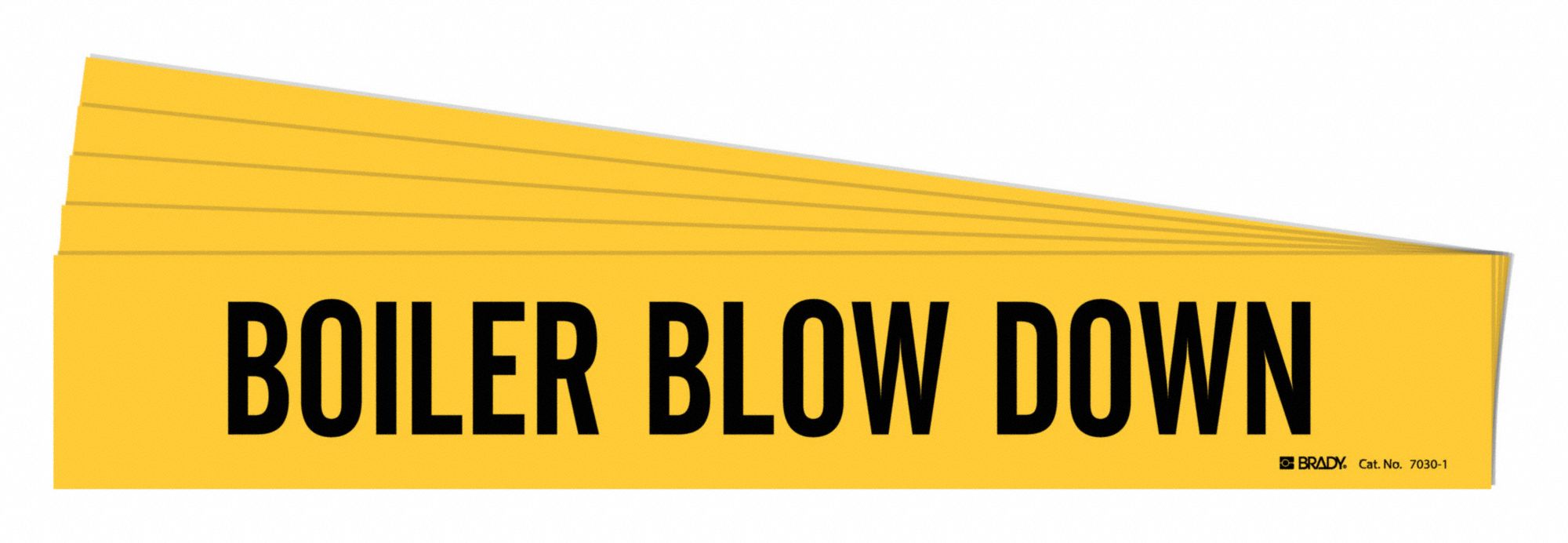
Table of Contentsexpand_more
Types of Boiler: Complete Buyer's Guide for the Philippine Market
Whether you're upgrading an existing plant or building a new process line, knowing the types of boiler is the first decision. In the Philippines, industries from sugar mills to semiconductor plants rely on steam for heating, sterilizing, and power generation. This guide explains each boiler category, what to specify, and how 3G Electric — with more than three decades of industrial supply experience — can help you source the right equipment and genuine BRADY pipe markers for blowdown lines. Our specialists interpret your needs, source the exact parts, and support your project from quotation to delivery.
How Boilers Work: Key Concepts
A boiler transfers heat from combustion or electric resistance into water to produce steam or hot water under pressure. The loop is simple: feedwater enters, is heated, leaves as steam, and condensate returns. The heavier the thermal load, the higher the required steam pressure and capacity. Every boiler also has a blowdown line that removes dissolved solids to prevent scale and corrosion. Because blowdown lines carry extreme heat and pressure, they must be clearly identified — that's where durable pipe markings become a safety-critical component.
Boiler Type Specification Table
| Boiler Type | Typical Capacity | Operating Pressure | Efficiency | Common Fuel |
|---|---|---|---|---|
| Fire-tube | 1,000–20,000 kg/h | up to 20 bar | 80–85% | Natural gas / diesel |
| Water-tube | 10,000–200,000 kg/h | up to 100 bar | 85–90% | Coal / biomass |
| Electric | 100–5,000 kg/h | up to 10 bar | 98–99% | Electricity |
| Condensing | 1,000–50,000 kg/h | up to 16 bar | 95–98% | Natural gas |
Types & Applications in the Philippines
Fire-tube boilers are the workhorses of small-to-medium plants. They are commonly used in food processing, hotels, laundries, and district cooling systems across Metro Manila and Cebu. They handle lower pressure with simple water-side maintenance.
Water-tube boilers manage very high pressure and demand, making them the choice for power generation, large sugar refineries, and petrochemical facilities in Luzon and Mindanao. They respond quickly to load changes but require more sophisticated water treatment.
Electric boilers are clean, compact, and ideal for facilities with reliable grid power or renewable energy sources. They suit batch-process steam needs and low-emission zones, such as electronics manufacturers in CALABARZON.
Condensing boilers recover latent heat from flue gas, achieving efficiency above 95%. They are gaining traction in Philippine gas-fired plants where LPG or natural gas is available and space is limited.
How to Select the Right Boiler
- Confirm your required steam output in kg/h or MW. This drives the boiler frame size.
- Check the operating pressure in bar or psig. Fire-tube tops out near 20 bar; water-tube can exceed 100 bar.
- Audit fuel availability: diesel, LNG, biomass, electricity, or waste heat. Look at cost and delivery logistics.
- Evaluate total installed cost, not just capital. Include piping upgrades, water treatment, and blowdown handling.
- Plan for water quality and blowdown management. Hard water is a common problem in the Philippines.
- Specify pipe identification for all lines, especially blowdown. Use ANSI/ASME-style markers such as those from BRADY.
According to BRADY Pipe Marking Solutions Guide, 2022: "Proper pipe identification ensures that every line, including boiler blowdown, is recognized by operators and maintenance teams, reducing the risk of accidents and supporting compliance with facility safety standards."
Boiler Blowdown Pipe Markers from BRADY
Once your boiler system is in place, you need labels that survive humidity, heat, and washdown. BRADY pipe markers are engineered for industrial environments. Here is a comparison of the boiler blowdown markers we stock at 3G Electric.
| Product | Legend / Colors | Pipe OD Range | Arrows | Pack Size |
|---|---|---|---|---|
| BRADY Green Boiler Blowdown Marker (2-1/2–7-7/8 in) | Green / white | 2-1/2 – 7-7/8 in | No | 5 pack |
| BRADY Yellow Boiler Blowdown Marker (8 in and larger) | Yellow / black | 8 in and larger | No | 5 pack |
| BRADY Green Boiler Blowdown Marker (8 in and larger) | Green / white | 8 in and larger | No | 5 pack |
| BRADY Green Boiler Blowdown Marker with Arrows (3/4 in and smaller) | Green / white | 3/4 in and smaller | Yes | 5 pack |
| BRADY Yellow Boiler Blowdown Marker (3/4–2-3/8 in) | Yellow / black | 3/4 – 2-3/8 in | No | 4 pack |
| BRADY Green Boiler Blowdown Marker (3/4–2-3/8 in) | Green / white | 3/4 – 2-3/8 in | No | 4 pack |
| BRADY Yellow Boiler Blowdown Marker (2-1/2–7-7/8 in) | Yellow / black | 2-1/2 – 7-7/8 in | No | 5 pack |
| BRADY Yellow Boiler Blowdown Marker with Arrows (3/4 in and smaller) | Yellow / black | 3/4 in and smaller | Yes | 5 pack |
Why Source Boiler and Labeling Supplies from 3G Electric?
- 12 boiler-related products in stock today, ready to ship across the Philippines.
- 35+ years of industrial supply experience, with deep specialist knowledge in combustion, pumps, and controls.
- Technical support for sizing, selection, and application questions before you buy.
- Dedicated account managers for project quotes and quick turnaround.
Frequently Asked Questions
Q: What are the main types of boilers?
A: The four primary types are fire-tube, water-tube, electric, and condensing boilers. They differ by capacity, pressure, fuel, and efficiency. Fire-tube suits lower pressure, water-tube handles high pressure, electric is clean, and condensing maximizes gas efficiency.
Q: How to choose a boiler for a Philippine plant?
A: First list your steam demand in kg/h and pressure in bar. Then check local fuel availability — diesel and LPG are common, biomass is growing. Compare efficiency and maintenance costs. For large loads above 10,000 kg/h, water-tube is usually preferred; below that, fire-tube or electric may be cost-effective.
Q: Where to buy boiler blowdown pipe markers in the Philippines?
A: 3G Electric supplies genuine BRADY boiler blowdown pipe markers in Manila and delivers nationwide. We stock eight variants covering pipe sizes from 3/4 in to 8 in and larger, with or without directional arrows. Contact our sales team for a quotation.
Q: Fire-tube vs water-tube boiler: which is better?
A: It depends on duty. Fire-tube boilers are simpler, cheaper, and ideal below 20 bar and 20,000 kg/h. Water-tube boilers handle higher pressures and capacities, respond faster, and are safer under load swings, but cost more to maintain.
Q: Why is boiler blowdown labeling important?
A: Boiler blowdown lines carry very hot, high-pressure water. Without clear pipe labels, operators can mistake them for feedwater or drain lines, causing injury or contamination. Proper labeling, using BRADY industrial-grade markers, supports safety compliance and efficient maintenance.
Key Takeaways
- Fire-tube boilers suit low-to-medium pressure applications; water-tube boilers handle high pressure and capacity.
- Condensing boilers deliver the highest gas efficiency; electric boilers provide zero on-site emissions.
- Always mark boiler blowdown lines with ANSI/ASME-compliant colored pipe markers.
- Work with a supplier that stocks both boiler-equipment and labeling materials — 3G Electric delivers both.
Ready to buy? Contact 3G Electric today for a quote on your boiler project and BRADY pipe identification supplies. Our engineers can help you select the right boiler type and ensure every line — especially blowdown — is labeled correctly. Reach us at sales@3gelectric.com.ph or call +63-2-8888-0000.