Infrared Burner Buyer's Guide for Industrial Heating in the Philippines
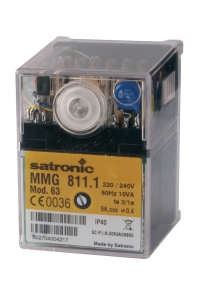
Table of Contentsexpand_more
What Is an Infrared Burner?
An infrared burner is a radiant heating appliance that converts fuel (natural gas, diesel, or heavy oil) into intense infrared radiation, warming objects and spaces directly rather than heating air. Unlike convection burners, infrared units emit long-wave radiation that penetrates materials, making them ideal for drying, curing, and comfort heating in Philippine industrial facilities. FBR and Honeywell are the leading manufacturers trusted by 3G Electric for 35+ years. Our portfolio spans light-oil, gas, and dual-fuel burners rated 101–6395 kW, serving manufacturing plants in Manila, Cebu, Davao, and beyond.
How Infrared Burners Work
Infrared burners operate by igniting fuel in a combustion chamber, with heat radiated through ceramic or metal surfaces. The fuel—delivered by an oil pump or gas train—is atomized and burned, generating temperatures up to 900 °C. Radiation then travels outward without heating intermediate air. A control relay (such as the [[PRODUCT:REL25119|Honeywell MMG 810.1 MOD 45 relay]]) manages ignition sequence, flame detection, and fuel shutoff, ensuring safe, repeatable operation across multiple thermal cycles per day.
Infrared Burner Types & Thermal Power Range
Industrial infrared burners fall into three main categories:
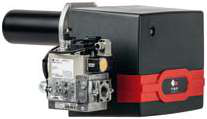
- Light-oil burners: 101–400 kW, suitable for small-to-medium facilities. The [[PRODUCT:001618|FBR G X5/2 TL SI]] delivers 101–400 kW with a 450 W fan motor, ideal for workshop heating and light manufacturing.
- Gas burners: 192–2209 kW, two-stage modulating designs for energy efficiency. The [[PRODUCT:002479_41|FBR GAS P 100/2 CE-LX4 TL EVO Cl. 4]] (192–1163 kW) and [[PRODUCT:002585|FBR GAS P 250/M CE-LX TL MEC Cl. 3]] (372–2209 kW) include low-NOx burner technology, meeting Philippine environmental standards.
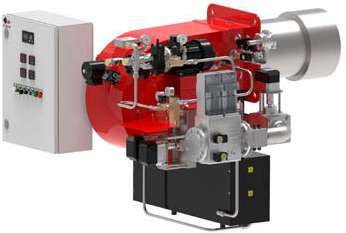
- Heavy-oil/dual-fuel burners: 698–6395 kW, for large industrial heating and process applications. The [[PRODUCT:KN_550_M_TL_EL|FBR KN 550/M TL EL]] dual-fuel unit handles both diesel and heavy oil, delivering 698–6395 kW across industrial plants in Laguna, Cavite, and Bulacan.
Key Specifications & Selection Criteria
| Model | Fuel Type | Power Range (kW) | Nozzle (mm) | Weight (kg) | Best For |
|---|---|---|---|---|---|
| [[PRODUCT:001618|FBR G X5/2 TL SI]] | Light Oil | 101–400 kW | 215 mm | 25 kg | Small workshops, localized heating |
| [[PRODUCT:002479_41|FBR GAS P 100/2 CE-LX4]] | Natural Gas | 192–1163 kW | 250 mm | 44 kg | Medium facilities, low-NOx requirement |
| [[PRODUCT:002585|FBR GAS P 250/M CE-LX TL MEC]] | Natural Gas | 372–2209 kW | 481 mm | Not specified | Large industrial heating, modulating control |
| [[PRODUCT:KN_550_M_TL_EL|FBR KN 550/M TL EL]] | Diesel/Heavy Oil | 698–6395 kW | 560 mm | 341 kg | Maximum output, dual-fuel flexibility |
When selecting an infrared burner, follow these steps:
- Calculate facility heating load: Determine total kW required based on space volume, insulation, and ambient temperature. Most Philippine manufacturing facilities require 500–3000 kW.
- Confirm fuel availability: Check whether your site has natural gas (LPG or piped), diesel, or heavy oil supply. Dual-fuel models offer flexibility.
- Verify electrical supply: Gas burners require 230 V single-phase or 380 V three-phase. Heavy-oil burners demand robust three-phase supply (15 A minimum).
- Account for control requirements: Two-stage burners (FBR GAS P series) save fuel during low-load periods; modulating units reduce on-off cycling.
- Check installation space: Heavy-oil burners (341 kg) require reinforced mounts and clearance for combustion air intake and exhaust ducting.
Why Source from 3G Electric?
3G Electric is an authorized distributor of FBR and Honeywell burner systems, holding 35+ years' experience in the Philippines industrial heating market. We stock 8+ products covering 101–6395 kW range, with full English technical support, import documentation handling, and delivery to Manila, Cebu, and Davao. Our engineers assist with sizing, commissioning, and spare-parts logistics. Every unit arrives with OEM warranties and local service access.
Frequently Asked Questions
Q: What's the difference between infrared and convection heating?
A: Infrared burners radiate heat directly to objects (no air heating), reaching 90%+ efficiency. Convection burners warm air first, losing 30–40% to ceiling air stratification. Infrared excels in drafty Philippine warehouses and outdoor-adjacent spaces.
Q: Can I switch fuel types on a FBR dual-fuel burner?
A: Yes. The [[PRODUCT:KN_550_M_TL_EL|FBR KN 550/M TL EL]] accepts both diesel and heavy oil; simply change the nozzle and fuel line, then adjust controls. 3G Electric provides fuel-change documentation.
Q: How often do infrared burners need servicing in the Philippines?
A: Annual maintenance is recommended in tropical climates due to humidity and dust. Inspect nozzles, electrodes, and fan filters every 6 months to maintain rated efficiency.
Q: What's the typical payback period for a FBR burner upgrade?
A: Energy savings from two-stage modulating control (GAS P 250/M) offset capital cost in 18–24 months for continuous 16+ hour/day operation, common in Philippine food processing and textile drying.
Key Takeaways
- Infrared burners deliver 101–6395 kW, suited to Philippine industrial heating, drying, and food processing.
- FBR and Honeywell models offer gas, light-oil, and dual-fuel options; match your fuel supply and load precisely.
- Two-stage and modulating designs reduce energy costs by 15–25% vs. single-stage fixed-output burners.
- 3G Electric stocks ready-to-install units with English technical support, Manila/Cebu/Davao delivery, and local commissioning assistance.
Contact 3G Electric for Infrared Burner Quotes & Sizing
Need help selecting the right infrared burner for your Philippine facility? Contact 3G Electric today. We provide free thermal load assessments, comparative quotes (FBR vs. Honeywell), installation guidance, and full import coordination. Delivery to Luzon, Visayas, and Mindanao. Call or email now for same-week quotation.