
Hydraulic Pump Buyer's Guide Philippines | Selection & Sizing
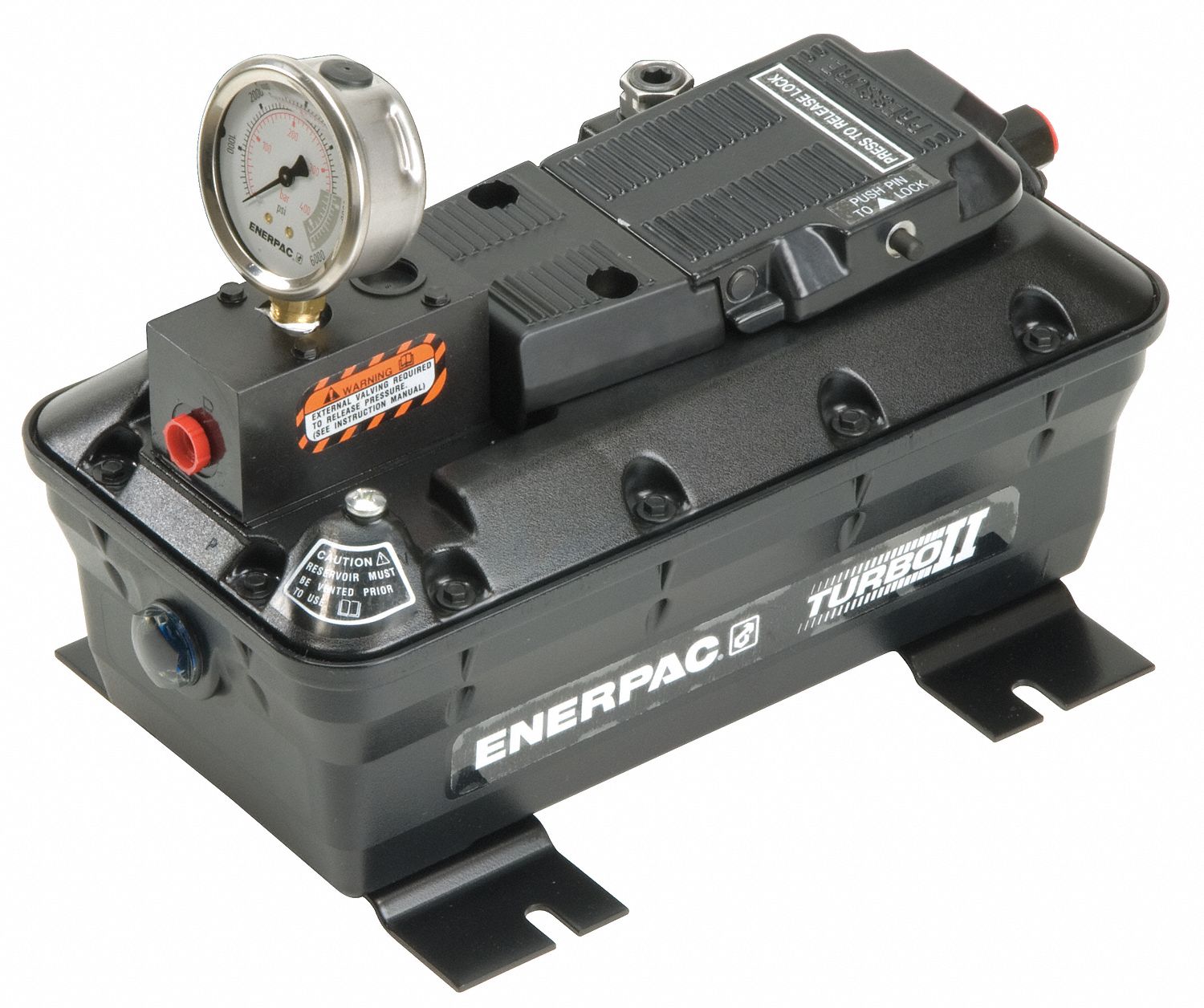
Table of Contentsexpand_more
What Is a Hydraulic Pump?
A hydraulic pump is a mechanical device that converts mechanical force (via an electric motor, diesel engine, or compressed air motor) into hydraulic energy by pressurising fluid. In industrial settings, air-operated hydraulic pumps are widely used because they are compact, intrinsically safe in flammable environments, and require no electrical power source.
Leading OEMs such as ENERPAC and BOLTING offer pumps designed for specific applications — from torque wrench operation to workholding on machining fixtures. 3G Electric, with over 35 years of experience in industrial supply, offers a curated selection of these pumps in the Philippines, backed by technical support and rapid delivery.
How an Air-Operated Hydraulic Pump Works
Compressed air enters a reciprocating air motor, which drives a small-diameter hydraulic piston. The piston draws oil from an integral reservoir and forces it through a check valve into the high-pressure side. The pressure intensification ratio — typically 1:100 to 1:200 — allows a 100 psi (6.9 bar) air supply to produce 10,000 psi (690 bar) hydraulic pressure. The pump cycles automatically until the set pressure is reached, then holds or retracts based on the control valve position.
Key Specifications Overview
| Parameter | Typical Range (Air-Operated Hydraulic Pumps) |
|---|---|
| Max operating pressure | 5,000–10,000 psi (345–690 bar) |
| Reservoir capacity | 0.53–2.5 gal (2–9.5 L) |
| Air supply requirement | 4–10 CFM at 80–120 psi (5.5–8.3 bar) |
| Control functions | 2‑position (advance/retract) or 3‑way (advance/hold/retract) |
| Weight (dry) | 12–35 lb (5.4–15.9 kg) |
| Sound level | 75–85 dBA |
Types & Applications in the Philippines
Torque wrench pump units (e.g., ENERPAC ZA4208TX series) are designed for accurate, repeatable bolting in heavy equipment assembly, shipbuilding, and structural steel erection. They typically operate at 10,000 psi and include pendant remotes for operator safety.
Workholding pump units (e.g., ENERPAC PACG3002SB) provide consistent holding force for clamping fixtures in machining centers. They are common in automotive parts manufacturing and metal fabrication shops across Metro Manila, Cebu, and Cavite industrial estates.
According to ENERPAC ZA4208TX Series Operation Manual, 2023: "When selecting a pump, ensure its reservoir capacity is at least equal to the full displacement volume of all cylinders plus a 10–15% reserve for oil expansion and tooling loss."
Selection Criteria (Numbered List)
- Pressure requirement – Determine the maximum hydraulic pressure needed for your cylinder or tool. Most torque wrenches require 10,000 psi (690 bar); workholding clamps often run at 5,000 psi (345 bar).
- Reservoir capacity – Calculate the total oil volume to fill all cylinders from fully retracted to fully extended. Add 10% reserve. For example, a single‑acting cylinder with 50 in³ displacement paired with a 0.53 gal (122 in³) reservoir is marginal; a 2.5 gal (578 in³) reservoir offers ample margin.
- Control valve functionality – A 2‑position valve (advance/retract) is sufficient for simple clamping. A 3‑way valve (advance/hold/retract) gives operator control for positioning and safety during bolting sequences.
- Air supply compatibility – Verify your plant air supply delivers the rated CFM at 80–120 psi. Many pumps require 4–10 CFM; undersized compressors cause slow cycling or stall.
- Portability and footprint – Choose a pump with a pendant remote (e.g., ENERPAC ZA4208TX‑QR) for remote operation. Compact units (below 15 lb) are ideal for field service trucks and construction sites.
Product Comparison Table
| Model | Max Pressure | Reservoir Capacity | Control Type | Valve Function | Best For |
|---|---|---|---|---|---|
| ENERPAC ZA4208TX‑QR | 10,000 psi (690 bar) | 1.8 gal (6.8 L) | Pendant | 3‑way, retract | Torque wrench operation |
| ENERPAC ZA4208TX‑ER | 10,000 psi (690 bar) | 1.8 gal (6.8 L) | Pendant | 3‑way, retract | Torque wrench with extended remote |
| ENERPAC ZA4208TX‑QMR | 10,000 psi (690 bar) | 1.8 gal (6.8 L) | Pendant | 3‑way, retract | Torque wrench with quick‑mode regulator |
| BOLTING RWP55‑4‑BS | 10,000 psi (690 bar) | 2.5 gal (9.5 L) | Pendant | 2‑position, retract | High‑volume bolting, heavy equipment |
| BOLTING RWP55‑BS | 10,000 psi (690 bar) | 2.5 gal (9.5 L) | Pendant | 2‑position, advance | Large‑displacement cylinder operation |
| ENERPAC PACG3002SB | 5,000 psi (345 bar) | 0.53 gal (2 L) | Pendant | – | Workholding / light clamping |
Why Source Hydraulic Pumps from 3G Electric?
- Over 35 years of industrial supply experience in the Philippines.
- 34+ products in stock across air‑operated hydraulic pump categories — torque wrench, workholding, and tensioning.
- Authorised supplier for trusted OEMs: ENERPAC, BOLTING, and SIMPLEX.
- In‑house technical support to help with pump sizing, air supply calculations, and control selection.
- Nationwide delivery and fast turnaround for stock items.
Frequently Asked Questions
How do I select the right hydraulic pump for my application?
First, identify the required pressure (5,000 or 10,000 psi), then calculate total oil volume needed for your cylinders. Choose a reservoir at least 10–15% larger. Finally, select a control valve configuration (2‑position or 3‑way) based on whether you need an intermediate hold position.
Where can I buy hydraulic pumps in the Philippines?
3G Electric supplies air‑operated hydraulic pumps from ENERPAC and BOLTING. We offer online ordering, technical support, and delivery to Metro Manila, Cavite, Cebu, and other industrial hubs.
What is the difference between a 2‑position and a 3‑way valve?
A 2‑position valve switches between advance and retract with no hold. A 3‑way valve adds a neutral hold position, allowing the operator to stop the cylinder mid‑stroke — essential for torque wrench positioning and safety.
Can I use an air‑operated pump with a small compressor?
Only if the compressor delivers at least 4–10 CFM at 80–120 psi. Undersized compressors will cause slow pump cycling and may overheat. Check the pump’s CFM rating against your air supply capacity before purchasing.
What is the advantage of a pendant remote control?
A pendant remote lets the operator stand away from the pump and cylinder during operation, improving safety. It also provides precise control over advance, hold, and retract sequences, reducing fatigue on long bolting jobs.
How often should I service the hydraulic pump?
Change hydraulic oil every 500 hours or annually. Inspect air filters, check for leaks, and verify pressure gauge accuracy. ENERPAC recommends a full overhaul every 2,000 hours or 3 years, whichever comes first.
Key Takeaways
- Air‑operated hydraulic pumps are the most common type for bolting and workholding in the Philippines due to their safety and simplicity.
- Pressure capability (5,000 vs. 10,000 psi) and reservoir size are the two most important selection criteria.
- ENERPAC and BOLTING offer reliable, serviceable pumps with excellent parts availability.
- 3G Electric provides technical guidance, competitive pricing, and rapid delivery across the country.
Get a Quote or Sizing Assistance
Contact 3G Electric by phone or online form for help selecting the right hydraulic pump for your Philippine operation. We can provide a detailed quote, confirm stock availability, and advise on air supply requirements.